|
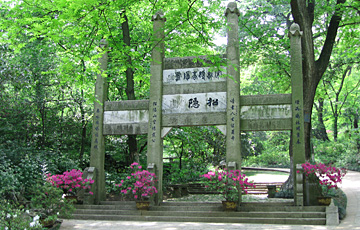
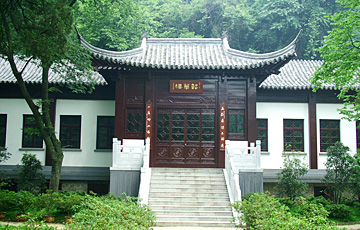
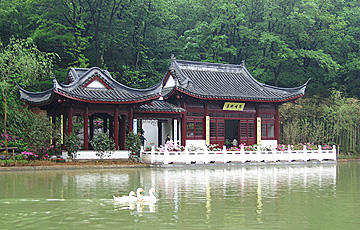
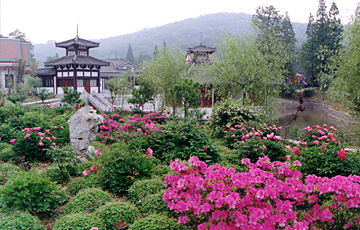
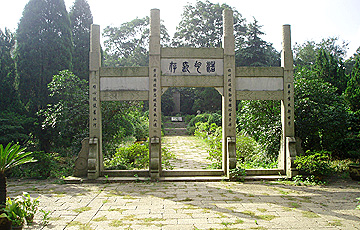
Yurui Pavilion
Yurui Pavilion was built because of Yurui flowers. During the Tang Dynasty,
there were three famous flowers in China, namely Luoyang Peony, Yangzhou
Qionghua, and Zhenjiang Yurui. Jade stamen flower belongs to the woody genus and
is a herbaceous vine flower of the genus Passionfruit. Its scientific name is
Passionfruit. Yuruihua has a long cultivation history in China and is often
confused with Qionghua. Yurui was regarded as a national treasure in the Tang
Dynasty, and was only allowed to be planted in the imperial garden and Hanlin
Academy. Yurui's hometown is in Zhenjiang, and Yurui flower originated from
Zhaoyin Mountain. She has many touching legends, which are recorded in ancient
books such as "Taiping Huanyu Ji" and "Yunyu Yangqiu". When Princess Tang Chang,
the daughter of Emperor Tang Minghuang, came to Runzhou (now Zhenjiang), she
heard many legends about the magnolia flowers. Especially when she saw that the
magnolia flowers bloomed like jade trees in the Yao forest, they were not of
equal quality. She went to Zhaoyin Mountain and transplanted two magnolia trees
to the backyard of the Chang'an Imperial Palace. But when the flowers from the
south moved to the north, the climate, water quality, and soil were vastly
different. The magnolia quickly withered and even became extinct by the end of
the Tang Dynasty, leaving no existence in the world. As a result, myths and
legends such as fairy tours emerged.
|
 |